
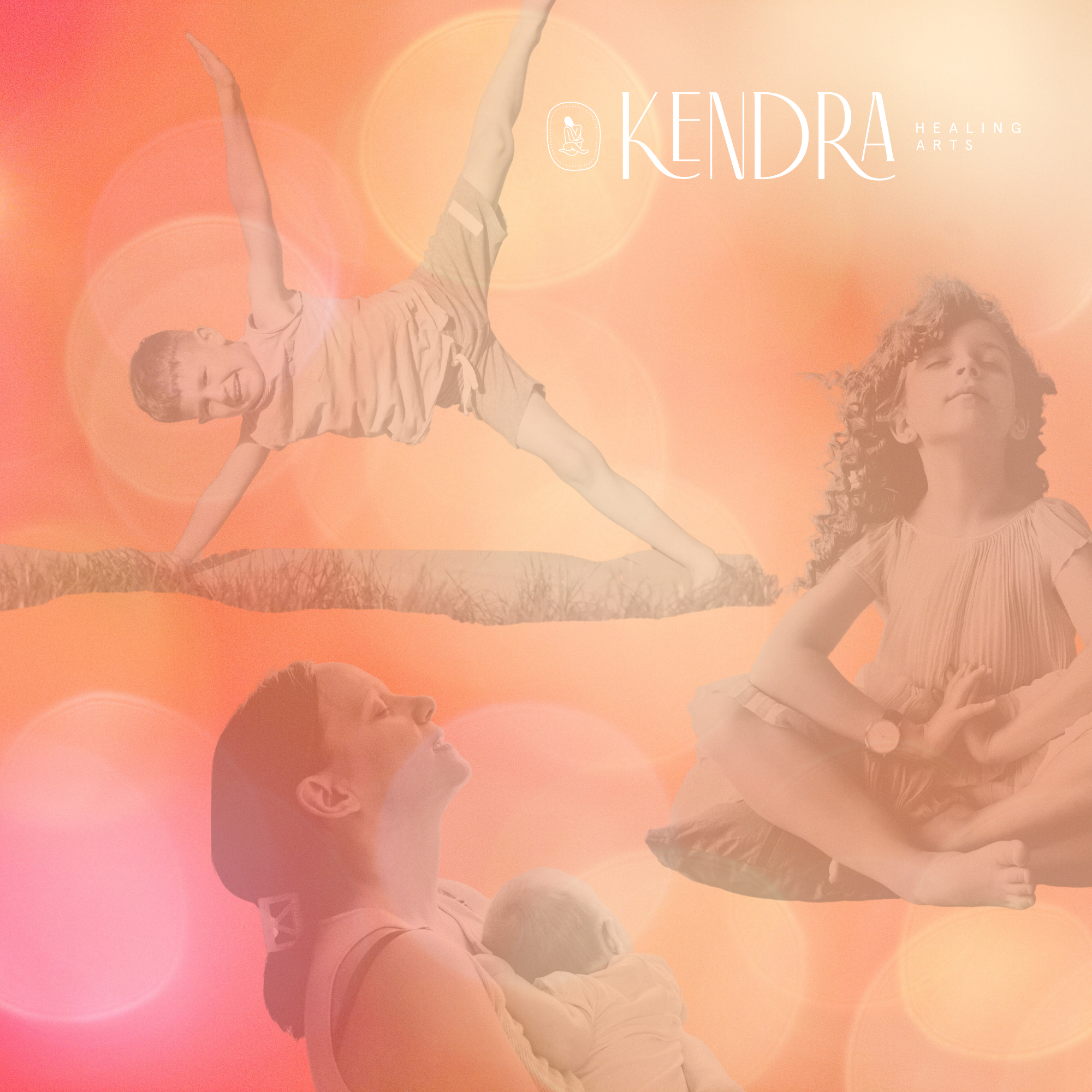
There is a particular kind of awareness that begins to live in you when your child is struggling. It’s not always something you can name straight away, but it’s there in the way you notice the small shifts—how quickly things can escalate, how hard it can be for them to come back down, and how much effort it seems to take just to get through certain moments of the day. Alongside this, there is often a quiet and persistent question that many parents carry: how do I actually help them in a way that reaches them?
When a Child is Stuck in Fight or Flight
When anxiety takes hold in a child, especially when it becomes intense or overwhelming, what I often see is not simply behaviour in the way it is commonly described. It is the expression of a nervous system that has moved into protection. And this is unfolding within a complex world—one that can feel fast, demanding, and at times overwhelming for a child who is still growing into their sense of self, and at times, losing connection to it.
Fight or flight can take over quickly, and once a child is there, it can feel almost impossible for them to think their way back to calm. This is often where many well-meaning strategies begin to fall short—not because they are incorrect, but because they are trying to engage a system that is no longer being led by thinking.
A Different Starting Point: The Body
What this often means in practice is that many of the strategies designed to help children “manage” their anxiety are meeting them at the level of thinking, when their experience is being driven by the body. A child in a state of protection is not choosing how they respond in those moments; their system is organising around safety.
So rather than asking them to override what is happening, the work becomes gently supporting the body to find its way back toward a sense of settling. This is where a body-based, trauma-informed approach offers something different—not by replacing other forms of support, but by meeting the child at the level where the experience is actually occurring.
“For the First Time, My Body and Brain Felt Connected”
One parent recently shared her experience of supporting her 10-year-old daughter through this kind of work.
Her daughter had been experiencing extreme anxiety—at times so intense it felt paralysing.
After just one session, something shifted.
“For the first time, my body and brain felt connected.”
There’s something profound in that.
Because for many children living in anxiety, that sense of connection simply isn’t there yet. And when it begins to emerge—even briefly—it opens a different pathway. One that is not driven by effort, but by awareness.
Why Trauma-Informed Support Matters
What I often notice in the room is that when a child is given space to move freely, something begins to shift without needing to be directed. I’m not asking them to perform or get it right. I’m following. And as a yoga therapist, I meet them where they are. Quite often, that in itself becomes a freeing kind of container.
One of the core principles of a trauma-informed approach is choice—and within that, the child’s own rhythm. Children are naturally expressive in the way they move between states. At times this might look fast, energetic, and expansive—running, spinning, or cartwheels. At other times, it may become slow, quiet, and inward—curling up, creating a small contained space, or what might feel like a “sleepy cave.”
Rather than directing or interrupting these rhythms, we follow them.
Because within those expressions, the child’s nervous system is already communicating what it needs.
In this way, the child begins to feel that their internal experience matters. That they don’t need to override or suppress what is happening, but can stay in relationship with it, with support. From here, the trauma-informed approach opens up choice-making within a safe and supported environment. The child begins to experience that they can move, pause, engage, or step back—and that each of those responses is welcome.
We then slowly begin to move towards the body, towards noticing—what is happening inside, what sensations are present, what feels okay, and what doesn’t. This is the beginning of rebuilding interoceptive awareness in a way that feels manageable.
When the Body Begins to Settle
What is often most noticeable is not a sudden transformation, but a series of small, meaningful shifts. A softening through the shoulders. A breath that drops a little more fully. A moment where the child begins to notice what is happening inside them, rather than being completely overtaken by it.
At times, there is also the option of therapeutic touch, always guided by consent and choice. Touch can be a powerful support for the nervous system when it is experienced as safe. It gives the body an opportunity to experience stillness in a way that is not forced. Because forced stillness can often increase activation, especially for a child whose system is already on high alert.
Play is an important part of this process as well. We might use simple yoga postures or breathing tools that feel engaging and accessible, so that regulation doesn’t feel like another task to get right. Alongside this, there is gentle psychoeducation, helping the child understand how their brain and body respond to stress, and why.
Building Skills for Life in a Demanding World
This work is not just about reducing anxiety in the moment.
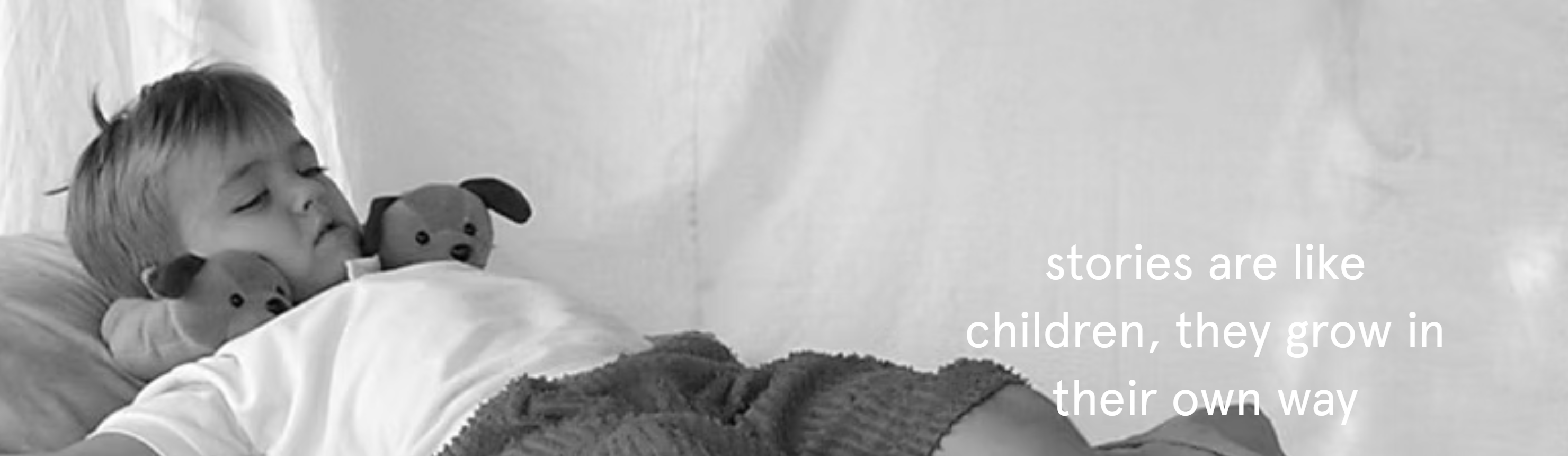
It is about supporting children to develop skills for life—within a world that is increasingly fast, stimulating, and at times overwhelming. A world that asks a lot of developing nervous systems, often before they have had the chance to fully anchor into themselves.
When a child begins to learn how to notice their internal state, to respond to their body, and to find their way back toward regulation, they are building something far deeper than coping strategies. They are learning how to reattune, and how to remain embodied in moments of stress, uncertainty, or emotional intensity.
These are not short-term fixes.
They are lifelong capacities.
Building a Toolkit (That Actually Gets Used)
Over time, these experiences begin to build into something more sustainable. Rather than relying on strategies that need to be remembered in the moment, the child starts to develop an internal sense of what helps them feel more settled.
Often, I will offer a simple practice to take home—something that doesn’t require a yoga mat or a structured routine, but something they can do in their own body, in their own space. This might be supported by a parent or caregiver, not as something to monitor or correct, but as a shared experience.
This is where the work begins to extend beyond the session itself and into everyday life.
A Note on Working with Children
Working with children is something I care deeply about. They don’t need to be fixed or pushed into change. They need to feel safe enough in their body to explore, to notice, and to reconnect with their own internal rhythms.
At times, when a child begins to feel more comfortable in their body, there may also be an openness to exploring natural tremoring. This isn’t something that is introduced quickly, but something that can be gently welcomed when there is enough safety. I don’t ask a child to do this alone. I meet them in it. At times I may tremor or move alongside them, so that it remains a shared, embodied experience.
TRE® and Yoga Therapy: Body-Based Tools That Support Regulation
Approaches such as trauma-informed yoga therapy and TRE® (Tension & Trauma Release Exercises) are part of a growing field of somatic practices that work directly with the nervous system.
Rather than focusing only on thoughts or behaviours, these approaches support the body’s innate ability to regulate, release tension, and return toward balance. In the case of TRE®, this can include the body’s natural tremoring response—an inbuilt mechanism that helps discharge stress without needing to cognitively process the experience.
There is also increasing interest in how these practices can be explored within the parent–child relationship. Emerging research is beginning to show that engaging in body-based regulation together may support not only the child’s emotional wellbeing, but also the relational connection between parent and caregiver.
This is where co-regulation becomes so important.
When both the child and the parent are supported to settle in their own bodies, there is often a shift in how they meet each other. The relationship itself begins to feel safer, more responsive, and less driven by stress patterns. Over time, this can create a different kind of rhythm within the family—one where regulation is not something the child has to do alone, but something that can be experienced together.
When You’ve Tried Everything Else
Many families who arrive here have already explored a range of therapies and approaches. It is not uncommon to hear that while some have offered insight or temporary support, they have not fully reached the level where lasting change occurs.
One parent shared:
“We have tried so many different therapies and modalities, and this is one of the few that has made a real difference.”
“Kendra meets them where they’re at and gives them agency and autonomy… which is so important for anxious kids.”
“Whenever she enters the space, you can just see the stress melt off her.”
There is often a sense, not just of change, but of relief.
Healing, Not Fixing
This is the nature of the work.
It is not about fixing.
It is about healing.
And healing, especially for children, does not always look serious or structured. It can be playful, creative, and at times even joyful. Many of the children I work with laugh, explore, and move in ways that feel natural to them.
Because when a child begins to feel safe enough to be in their body, even in small moments, they are not just learning how to manage anxiety.
They are beginning to reconnect with themselves.
You’re welcome to book an initial wellbeing session, where we can begin to explore what a supportive approach might look like for your child.
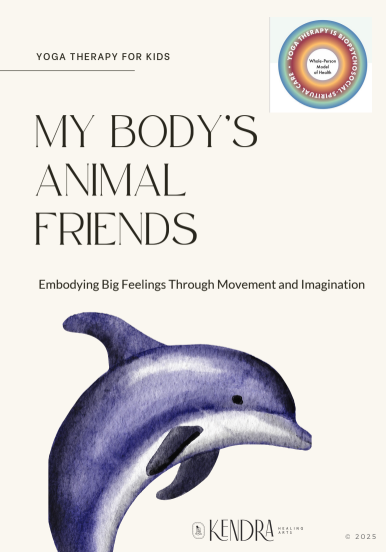
Grab your My Body's Animal Friend E-Book a practical guide for parents to including guided practices you can do at home with your child today including a bonus spotify playlist.
References & Emerging Research
- Study protocol: Mother–child intervention model using neurogenic tremor as an adjunct treatment for adolescents with emotional disorders
- Preliminary EEG findings exploring changes in adolescents participating in TRE®
- EEG observations in mothers of children with depressive disorders engaging in tremor-based interventions
- Emerging research into co-regulation and parent–child nervous system synchrony in somatic therapies

Responses